When an Arson Claim Denied Label Gets Weaponized Against Innocent Homeowners
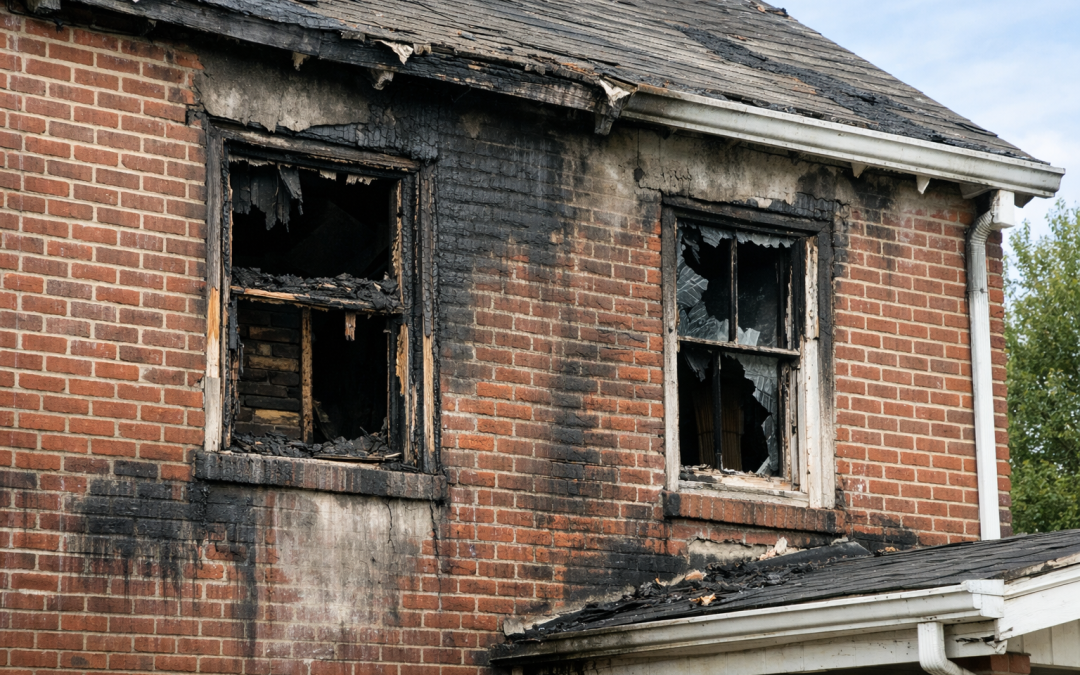
An arson claim denied on the basis of alleged fraud can happen to homeowners who did absolutely nothing wrong. In the Virginia case we examine throughout this article, the insurer invoked its policy’s “concealment or fraud” clause — not because investigators found physical proof of intentional fire-setting, but largely because the homeowner was behind on mortgage payments and had recently increased their coverage. That financial circumstance alone became the insurer’s primary weapon, and it nearly worked.
Key takeaways
- An insurer invoking the ‘concealment or fraud’ clause to deny an arson claim must have credible, documented evidence — not just a financial motive theory.
- A public adjuster can reopen a denied arson claim by systematically challenging the insurer’s investigation methodology and timeline.
- An independent fire investigator’s origin-and-cause report often carries decisive weight when it contradicts the insurer’s hired expert.
- Virginia policyholders have the right to request a complete copy of the claim file, which frequently reveals gaps or bias in the denial rationale.
- Documenting your financial situation thoroughly before a loss — mortgage statements, tax returns, insurance payment history — can directly undercut an assumed motive argument.
The Virginia Homeowner’s Situation at a Glance
The homeowner, a longtime Virginia resident, experienced a devastating house fire that caused extensive structural and personal property damage. They filed promptly, cooperated with the insurer’s investigators, and submitted the documentation they were asked for. Weeks later, they received a denial letter. The insurer’s position rested on two pillars:
- Financial motive: The homeowner had been experiencing financial hardship, which the insurer framed as a reason to commit arson for the insurance payout.
- Alleged misrepresentation: The insurer claimed the homeowner had not been fully transparent about certain policy details during the application process, triggering the fraud and concealment exclusion.
Neither accusation came with a criminal charge. No arrest was made. Yet the claim was denied in full.
Why Insurers Lean on the Fraud Clause — Even Without Hard Evidence
Insurance companies understand that the “concealment or fraud” clause is one of the most powerful tools available to them. When invoked, it can void an entire policy retroactively — meaning the insurer owes nothing, not even for losses that are clearly covered. For a homeowner already in financial distress, the cost and complexity of fighting back can feel insurmountable. Some simply walk away.
That is precisely what makes this tactic so effective — and so troubling. Financial hardship is not evidence of arson. A mortgage in arrears does not make someone an arsonist. Yet the circumstantial framing can feel damning when it is laid out in a formal denial letter by an insurer’s legal team.
How the Denial Was Successfully Challenged — The Short Answer
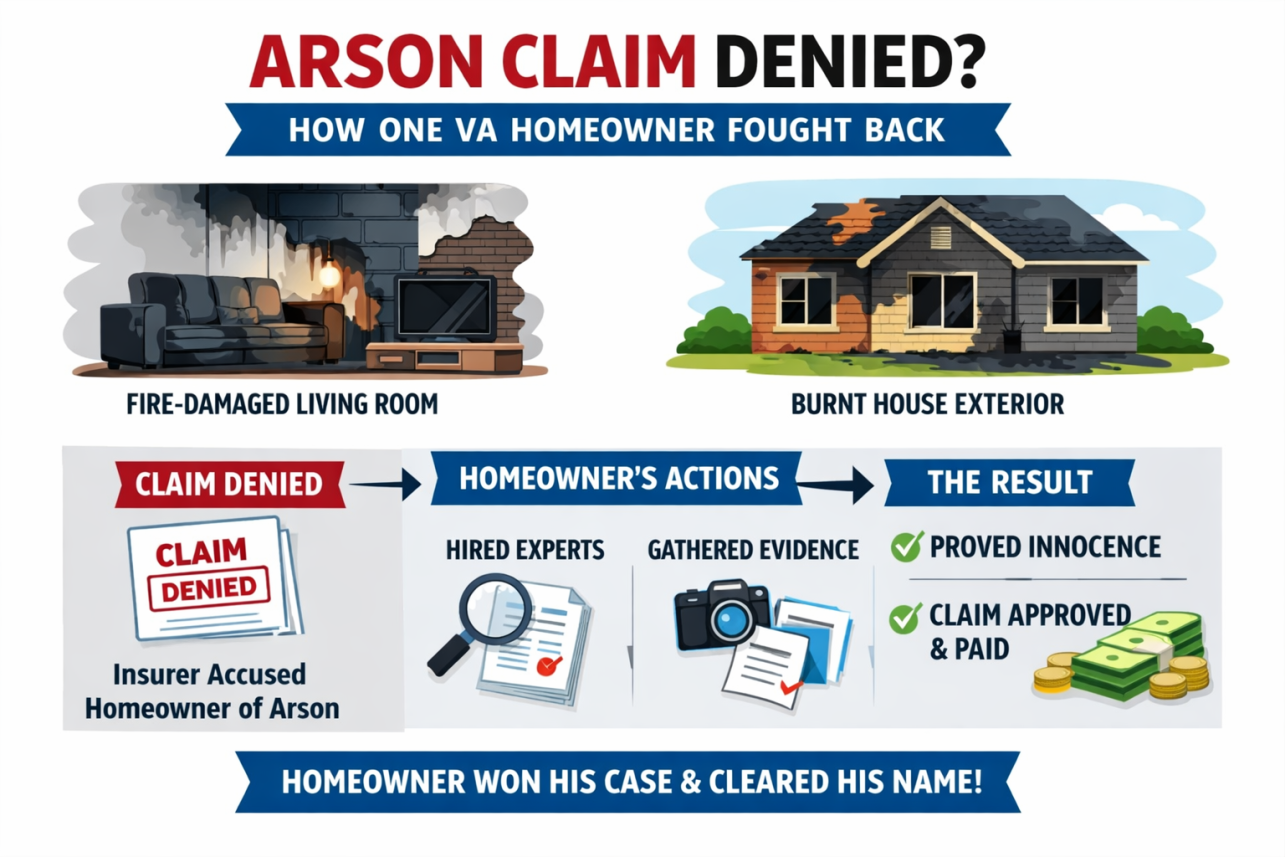
The Virginia homeowner did not walk away. By retaining a public adjuster and an independent fire investigator, they were able to build a counter-case grounded in physical fire science, documentation, and policy law. The insurer’s circumstantial argument unraveled once objective evidence was placed against it. The sections below explain exactly how that process worked — and what Virginia and North Carolina homeowners in similar situations can do right now.
What Does the ‘Concealment or Fraud’ Clause Actually Mean in a Fire Claim?
Why Was This Arson Claim Denied — and Was the Insurer’s Case as Strong as It Seemed?
The arson claim denied in this Virginia case rested almost entirely on circumstantial financial evidence — not physical proof of intentional fire-setting. The insurer pointed to the homeowner’s recent mortgage stress and a lapsed life insurance policy as signs of motive, but a closer look at the denial letter revealed that the carrier’s own fire investigation report contained critical gaps that undercut the whole conclusion.
The Insurer’s Core Arguments
When the denial letter arrived, it cited three main pillars the insurer believed justified withholding payment:
- Financial motive: The homeowner had missed two mortgage payments in the months before the fire, which the carrier framed as evidence of a deliberate plan to collect insurance proceeds.
- Alleged opportunity: The insurer noted the homeowner was the last known person at the property before the blaze started, though no witness placed them there at the time of ignition.
- Fire origin conclusions: The carrier’s investigator classified the fire’s point of origin as “undetermined” but still characterized burn patterns as “consistent with” accelerant use — a phrase that sounds damning but carries far less legal weight than a definitive finding.
What the Denial Letter Left Out
When a public adjuster reviewed the file, several evidentiary gaps became apparent almost immediately. These weren’t minor technical quibbles — they went to the heart of whether the insurer had a defensible basis for denial at all.
- No laboratory confirmation of accelerant: Despite the language about burn patterns, the investigator had not submitted samples to an accredited lab for chemical analysis. “Consistent with” accelerant is not the same as finding accelerant.
- Alternative ignition sources were not ruled out: The home had aging electrical wiring and a natural gas line that ran near the area identified as the fire’s origin. Neither was documented as having been fully examined or eliminated.
- Financial stress reframed: Missed mortgage payments can reflect hardship just as easily as motive. The insurer made no attempt to account for documented job loss the homeowner had experienced, which provided an alternative explanation for the financial picture.
- No arson conviction or criminal charge: Insurers sometimes proceed as if a civil denial and a criminal finding are equivalent. In Virginia, an insurer bears its own burden of proof in a coverage dispute — the absence of a criminal case matters.
Why This Pattern Is More Common Than Homeowners Realize
Insurance companies are entitled to investigate suspicious fires thoroughly, and legitimate fraud does occur. But financial pressure alone is not proof of arson, and an “undetermined” origin finding is not a finding of intentional fire-setting. When a carrier conflates the two, the denial may look airtight in a letter while being genuinely vulnerable to challenge once a qualified expert examines the underlying investigation.
How a Public Adjuster and Independent Fire Investigator Documented the Truth After an Arson Claim Denied
When a homeowner’s arson claim is denied, the insurer’s origin-and-cause report is not the final word. A licensed public adjuster and a certified independent fire investigator can systematically re-examine the scene, challenge flawed methodology, and build a counter-narrative grounded in physical evidence — often uncovering critical details the insurance company’s team missed or ignored.
Step 1: Securing and Documenting the Scene
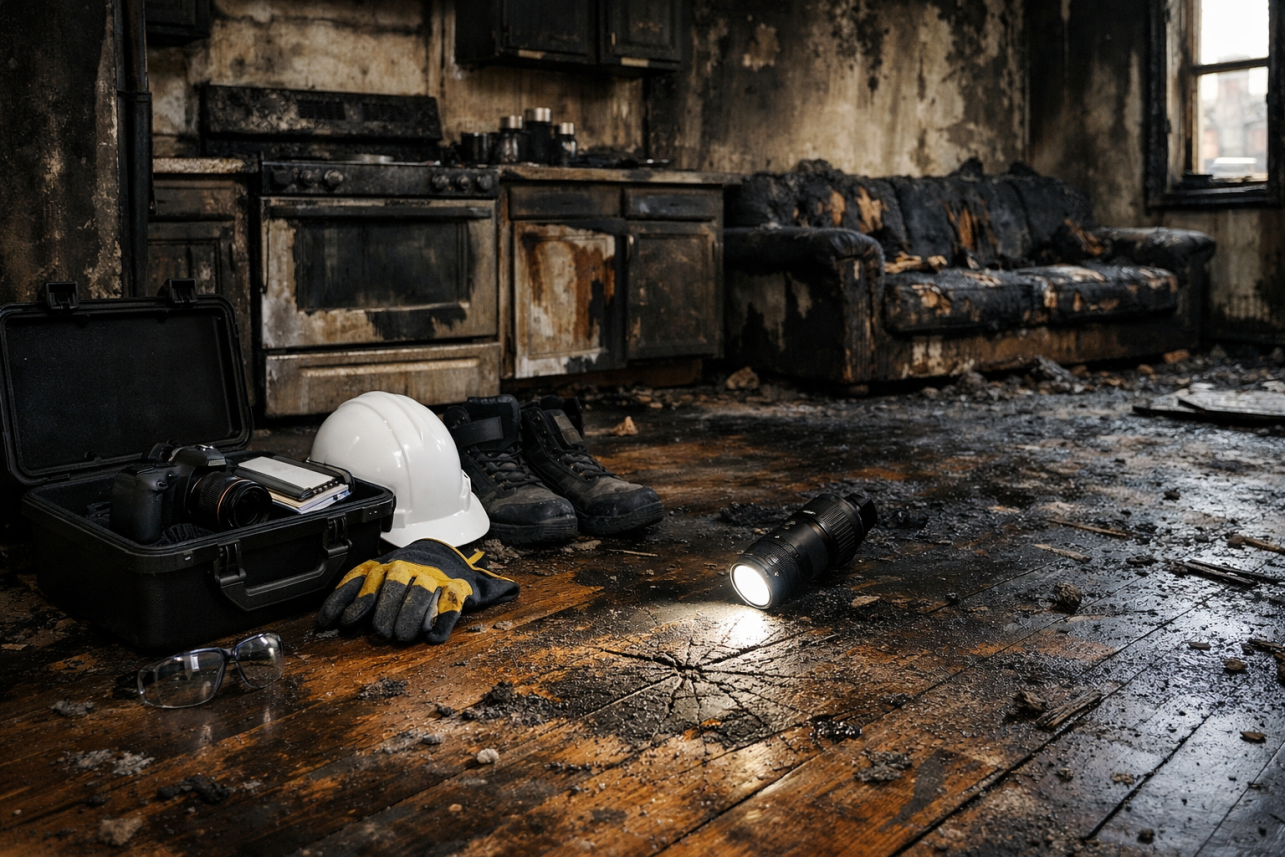
The public adjuster’s first move was to preserve what remained of the property before further deterioration or cleanup could destroy evidence. Working alongside a certified fire investigator credentialed through the National Association of Fire Investigators (NAFI) or the International Association of Arson Investigators (IAAI), they conducted a thorough walk-through, photographing burn patterns, char depth, structural damage, and the condition of windows, doors, and utility systems.
Step 2: Re-Examining Origin and Cause Findings
The insurer’s investigator had pointed to a specific room as the fire’s origin and suggested the burn pattern indicated an accelerant was used. The independent investigator applied NFPA 921 — the nationally recognized guide for fire and explosion investigations — and found significant problems with that conclusion:
- The “V-pattern” burn the insurer cited as evidence of accelerant use was consistent with a known piece of furniture burning near a wall, a well-documented phenomenon in modern fire science.
- Char depth measurements across the structure did not support the claimed origin point.
- No laboratory analysis confirming accelerant residue had been performed by the insurer’s team — a serious procedural gap under NFPA 921 standards.
Step 3: Exposing Timeline Inconsistencies
The insurer’s denial letter leaned heavily on the homeowner’s timeline, suggesting it was implausible. The public adjuster gathered utility records, cell phone location data, neighbor statements, and the local fire department’s dispatch and arrival logs. When laid side by side, these records directly contradicted the insurer’s claimed timeline and corroborated the homeowner’s account of when they left the property.
Step 4: Identifying Accidental Cause Evidence
The independent investigator also examined the electrical panel, HVAC system, and appliances in the area where the fire most likely started. Evidence of electrical arcing and a malfunctioning component provided a credible accidental ignition source — one the insurer’s report had not ruled out through any documented testing or analysis.
Why This Matters for Your Claim
Insurers sometimes build an arson narrative on methodology that would not withstand scrutiny in a courtroom or before a Virginia or North Carolina insurance commissioner. A public adjuster coordinates the investigative process, manages documentation, and works with qualified experts so that when you dispute a denial, you have a concrete, evidence-based rebuttal — not just your word against theirs.
What Court Cases Show That Insurers Can’t Deny an Arson Claim Without Solid Proof?
Courts across Virginia, North Carolina, and the broader United States have consistently held that an insurance company cannot simply label a fire as arson and walk away from a claim. To successfully deny an arson claim, an insurer must meet a genuine burden of proof — typically demonstrating arson by clear and convincing evidence, and in many jurisdictions also proving the policyholder’s direct involvement. Without that, denials don’t hold up.
The Burden of Proof Falls on the Insurer, Not You
One of the most important legal principles protecting homeowners is that when an insurer raises arson as a defense to paying a claim, the burden of proving that defense belongs to the insurance company. This is not a small hurdle. Courts have repeatedly overturned denials where insurers relied on circumstantial evidence — things like financial stress, the absence of forced entry, or a fire that burned hot — without presenting a complete, cohesive case that eliminates accidental or natural causes.
Virginia courts, following well-established common law, require that fraud and arson defenses be supported by more than suspicion or inference stacked on inference. The insurer must affirmatively establish:
- That the fire was intentionally set (incendiary origin)
- That the policyholder either set it or procured someone else to do so
- That there was a clear motive, such as financial gain
What Happens When Insurers Overreach
In cases where insurers have invoked fraud or concealment clauses based on flimsy or one-sided investigations, policyholders who litigated their claims have won substantial judgments — not only recovering the policy value but sometimes additional damages for bad faith handling. Virginia’s bad faith statute and similar provisions in North Carolina create real consequences for insurers who deny claims without a reasonable basis for doing so.
Why Independent Evidence Changes the Legal Landscape
Courts pay close attention to whether a policyholder obtained their own independent fire investigation and documentation. When a homeowner can present a competing expert opinion — a certified fire investigator who examined the same evidence and reached a different conclusion — it often dismantles the insurer’s case entirely. Judges and juries are not required to accept an insurance company’s hired expert as the final word.
If your arson claim was denied, the legal record strongly suggests that a well-documented challenge backed by independent expertise gives you meaningful leverage, both at the negotiation table and in court. You are not powerless simply because your insurer used the word “arson.”

What Should You Do If Your Fire or Arson Claim Was Denied in VA or NC?
If your fire or arson claim was denied in Virginia or North Carolina, act quickly and methodically: preserve all physical evidence, obtain your full claim file from the insurer, hire a licensed public adjuster and an independent fire investigator, and invoke your policy’s appraisal or suit provisions before any deadline passes. Taking these steps in the right order dramatically improves your chances of a successful appeal or legal challenge.
Step 1: Preserve Evidence Immediately
The single biggest mistake homeowners make after a denial is allowing the damaged property to be demolished, cleaned, or altered before an independent expert can examine it. Even if the insurer’s investigator has already completed their report, physical evidence can still matter during a reinvestigation or legal proceeding.
- Photograph and video the fire scene from multiple angles before anything is moved.
- Secure the property to prevent unauthorized access or further alteration.
- Retain any physical debris, wiring, or appliance components that investigators may want to re-examine.
- Keep copies of every document the insurer has sent you, including denial letters and investigation summaries.
Step 2: Demand Your Complete Claim File
Under Virginia and North Carolina insurance regulations, you have the right to request the claim file your insurer compiled. This file should include the adjuster’s notes, the fire investigator’s report, any photographs taken, and the specific policy provisions the insurer relied on to deny your claim. Reviewing this file often reveals weaknesses in the insurer’s reasoning or procedural errors they made during the claims process.
- Submit your request in writing and keep a copy with a timestamp.
- Note any deadlines stated in your denial letter — most policies impose a suit limitation period, often one to two years from the date of loss.
Step 3: Hire a Licensed Public Adjuster and Independent Fire Investigator
A licensed public adjuster works for you, not the insurance company, and can re-document your loss, challenge the insurer’s valuation, and manage communications on your behalf. Pair that with a credentialed, independent fire investigator — ideally one certified through the National Association of Fire Investigators or a similar recognized body — who can produce a competing origin-and-cause report if the insurer’s investigator reached unsupported conclusions.
You can verify a public adjuster’s license in Virginia through the Virginia State Corporation Commission Bureau of Insurance and in North Carolina through the North Carolina Department of Insurance.
Step 4: Invoke Your Policy’s Appraisal or Suit Provisions
Most homeowner policies contain an appraisal clause that allows both parties to appoint their own appraiser when there is a disagreement over the amount of a loss. If the dispute goes beyond dollar amounts and involves coverage itself — as it typically does when an arson claim is denied — consulting an insurance coverage attorney about filing suit may be appropriate. Do not let the suit limitation period expire while waiting for the insurer to reconsider voluntarily.
Realistic Timeline to Set
- Days 1–14: Preserve evidence, submit your claim file request, and consult a public adjuster.
- Weeks 2–6: Independent fire investigator completes their report; public adjuster prepares a formal rebuttal to the denial.
- Weeks 6–12: Submit the rebuttal to the insurer and request a reconsideration decision in writing.
- Beyond 90 days: If the insurer does not reverse the denial, evaluate the appraisal clause or consult legal counsel — well before any policy suit deadline.
Arson Claim Denied vs. Successfully Challenged: Key Differences in Approach
| Factor | Claim Stays Denied | Claim Successfully Challenged |
|---|---|---|
| Fire Investigation | Insurer relies solely on its own hired investigator | Policyholder retains independent certified fire investigator (CFEI) |
| Financial Motive Argument | Insurer’s theory goes unchallenged and undocumented | Policyholder presents financial records disproving distress narrative |
| Claim File Review | Policyholder never requests or reviews the claim file | Full claim file obtained and scrutinized for procedural errors |
| Professional Advocacy | Policyholder navigates denial alone | Public adjuster coordinates documentation, rebuttal, and re-inspection |
| Timeline of Response | Denial accepted at face value after initial letter | Formal dispute or appraisal demand filed within policy deadlines |
Illustrative Case: Northern Virginia Homeowner Reverses Arson Denial
Illustrative example
In a composite scenario based on common patterns in disputed fire claims, a Northern Virginia homeowner’s total loss fire claim was denied after the insurer alleged financial motive, pointing to a recent job change and a refinanced mortgage as evidence of distress. The homeowner retained a public adjuster, who requested the full claim file and identified that the insurer’s fire investigator had not documented alternative ignition sources near the point of origin.
An independent CFEI-credentialed investigator was then hired and produced a competing origin-and-cause report concluding the fire was consistent with an accidental electrical fault, not intentional ignition. Armed with the competing expert report, bank statements showing consistent mortgage payments, and a formal letter of representation, the public adjuster submitted a comprehensive rebuttal package to the insurer’s special investigations unit. Within several months, the insurer agreed to reconsider the claim and ultimately issued payment for the covered loss, illustrating how methodical documentation can shift the outcome of an arson claim denied on questionable grounds.
Frequently asked questions
What does it mean when an arson claim denied decision is based on the ‘concealment or fraud’ clause?
Most homeowner insurance policies include a concealment or fraud clause that allows the insurer to void coverage entirely if they believe the policyholder misrepresented material facts or participated in causing the loss. When an insurer invokes this clause in a suspected arson case, they are essentially alleging that the homeowner either set the fire or concealed information relevant to the claim. This is a serious allegation, and the burden generally falls on the insurer to support it with credible evidence — typically by establishing opportunity, motive, and incendiary cause. A denial on these grounds does not mean the case is closed.
How can a public adjuster help if my fire insurance claim is denied due to suspected arson?
A licensed public adjuster works on behalf of the policyholder — not the insurance company — to evaluate the claim, review the insurer’s investigation, and document evidence that supports a legitimate loss. In arson-related denials, a public adjuster can identify gaps or inconsistencies in the insurer’s fire investigation report, help organize financial records that counter a motive argument, and prepare a detailed claim package for appraisal or reconsideration. They can also help coordinate an independent fire investigator to provide an alternative expert opinion on the fire’s origin and cause.
What can an independent fire investigator find that an insurance company’s investigator might miss or interpret differently?
Independent fire investigators are retained by the policyholder and approach the scene without a predetermined conclusion. They may identify alternative accidental or electrical causes that were overlooked, challenge the methodology used to classify burn patterns as incendiary, or find that evidence was misinterpreted due to post-fire conditions like firefighting water damage or structural collapse. Their findings can be submitted as part of a formal dispute, used in an appraisal process, or presented if the case proceeds to litigation. A second expert opinion carries significant weight, especially when the insurer’s own report contains ambiguous conclusions.
What are the general steps a homeowner can take to dispute an arson-related claim denial?
First, request a complete copy of the insurer’s claim file, including all investigation reports, recorded statements, and the specific policy language cited in the denial letter. Second, consult a public adjuster or policyholder attorney to assess the strength of the denial. Third, commission an independent fire investigation if the origin and cause findings are in dispute. Fourth, compile financial records, bank statements, and other documentation that counters any alleged motive. Finally, submit a formal written dispute or invoke your policy’s appraisal clause if a disagreement over the loss value is also involved. Many states also allow complaints to the state insurance commissioner if bad faith handling is suspected.
Related local pages
- Public Adjuster Garner NC — Fight for the Full Settlement You Deserve
- Public Adjuster Holly Springs NC — Fight For The Full Settlement You Deserve
If your arson claim was denied in Virginia or North Carolina, don’t sign anything or walk away. Call us today for a free claim review — we’ve helped homeowners fight back and win. Get in touch.
Last updated: July 8, 2026