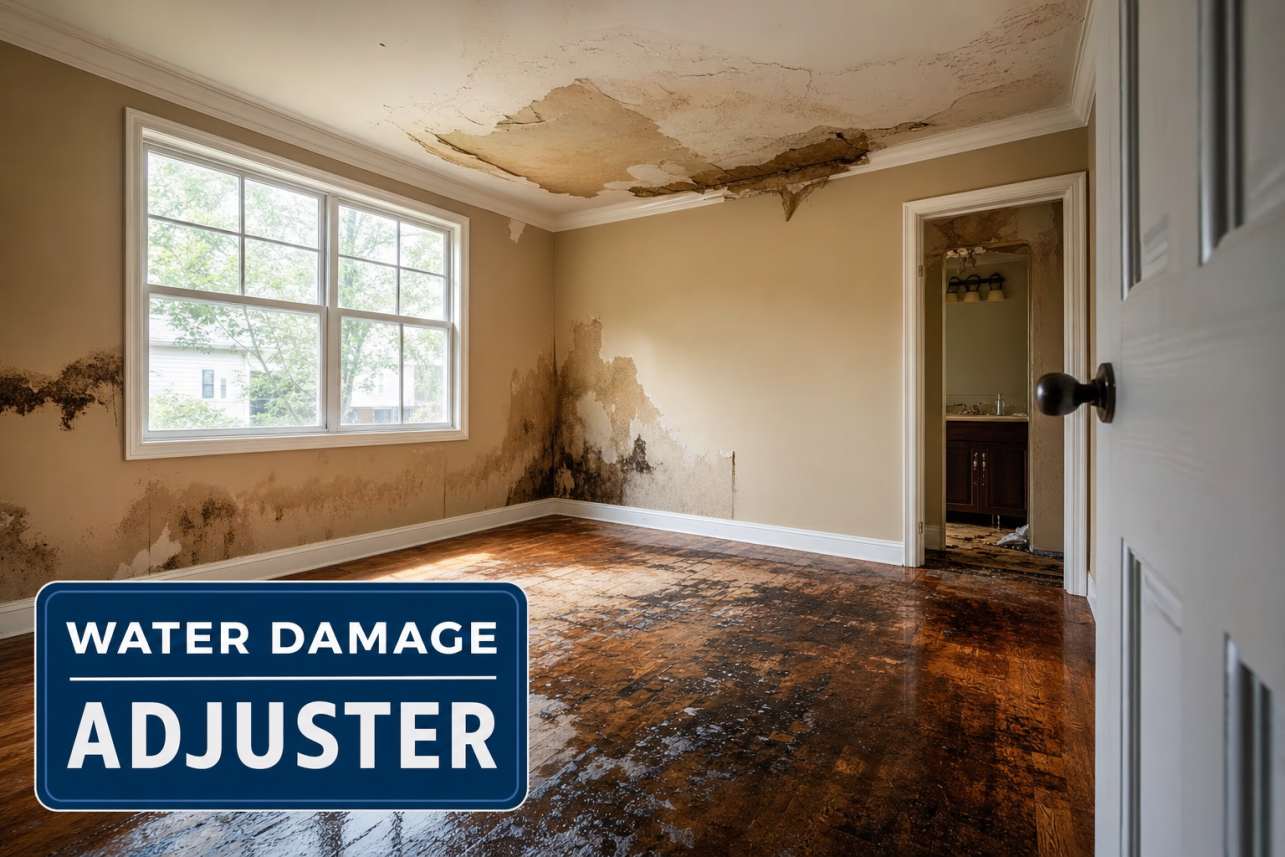
A water damage adjuster Haw River NC policyholders can hire is a licensed public adjuster who works for you — not the insurance company — to document, value, and negotiate your water damage claim. For The Public Adjusters, Inc. is licensed and bonded, and we represent homeowners and business owners across Alamance County when a burst pipe, roof leak, or appliance failure turns into a lowball offer or an outright denial. You pay nothing out of pocket to have us review your claim, and we only work on claims we believe have real merit.
What This Service Is
When water gets into your home, two problems start at once: the damage itself, and the insurance claim that follows. Most people assume the adjuster who shows up after they file is there to help them. That adjuster is paid by the insurance company, and their estimate reflects the company's interests.
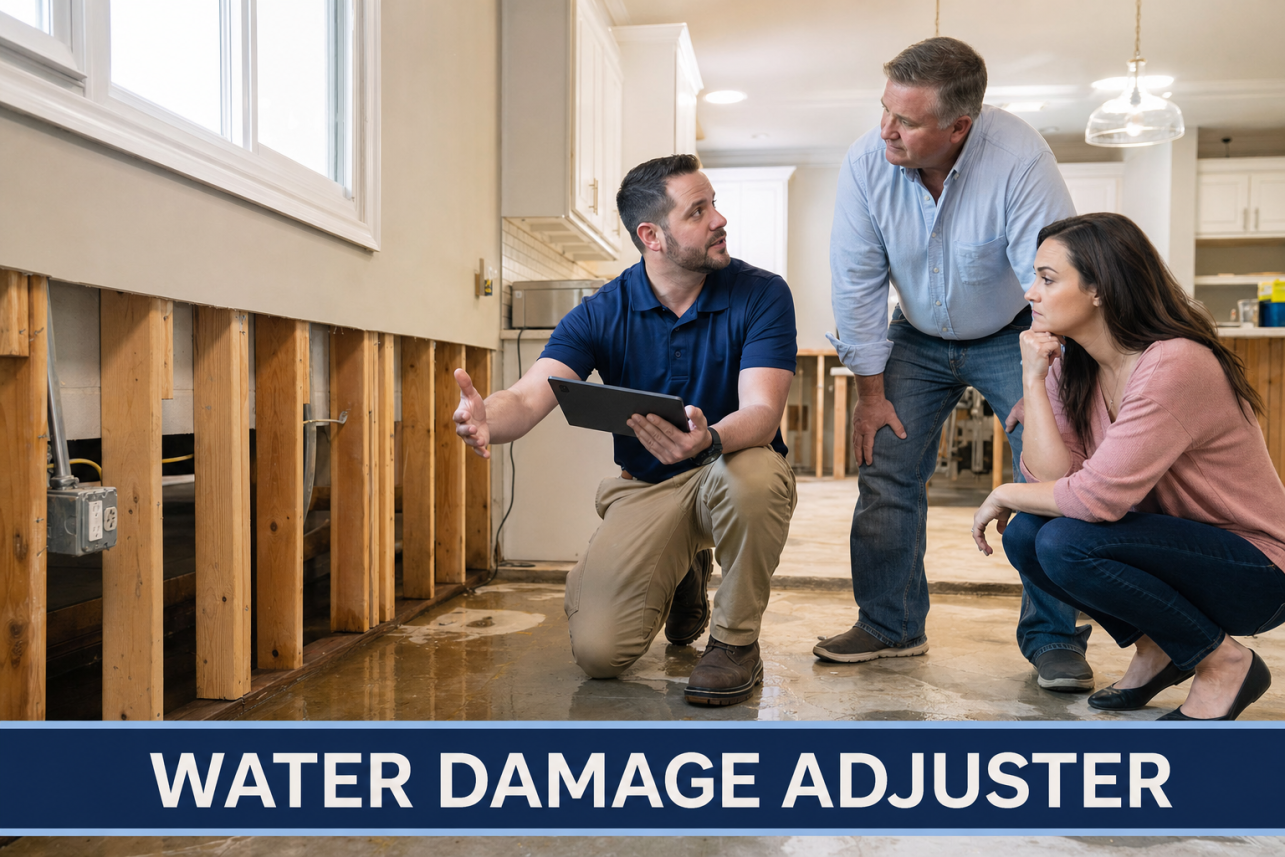
A public adjuster flips that arrangement. We work only for the policyholder. Our job is to read your policy carefully, inspect the damage thoroughly — including the moisture you can't see behind walls, under flooring, and inside insulation — and prepare a complete, documented claim with a repair estimate that reflects what it actually costs to restore your property in the Haw River area.
The North Carolina Department of Insurance publishes the NCDOI Public Adjusters Guide, which explains that public adjusters must be licensed by the state and act solely on behalf of the insured. That licensing matters: it means we're accountable to you and to state regulators, not to any carrier.
We handle residential and commercial water losses — burst and frozen pipes, roof leaks, water heater and washing machine failures, and sewer or drain backups where coverage applies. We also handle related claims like fire, smoke, tree damage, and flood claims through the National Flood Insurance Program. One important distinction we explain to every client up front: rising water from outside (flooding) is covered under a separate flood policy, while sudden water from inside your home falls under your homeowners policy. Knowing which policy applies — and pursuing the right one — is often the difference between payment and denial.
Common Problems
My Insurance Company's Offer Won't Come Close To Covering The Actual Repairs
This is the most common call we get. The carrier's estimate says a few thousand dollars will fix everything, but every contractor who walks through quotes two or three times that. The gap usually comes from what the insurance company's estimate leaves out: moisture that traveled into wall cavities and subfloors, matching flooring across connected rooms, and realistic labor rates.
Depreciation is another quiet culprit. If your policy pays actual cash value first, the carrier deducts for age and wear, and those deductions are often aggressive. Courts have pushed back on this — in Sproull v. State Farm Fire & Casualty Co., the Illinois Supreme Court sided with a homeowner and held the insurer could not depreciate the cost of labor when calculating an actual cash value payment on a property claim. The point for you: the first number you're handed is a starting position, not a verdict.
We rebuild the estimate line by line, document what was missed, and negotiate from evidence. We never guarantee a specific outcome — no honest adjuster can — but we make sure your claim reflects the full scope of the loss.
The Claim Was Denied, Delayed, Or Blamed On 'wear And Tear' — What Now?
Denials on water claims often lean on policy exclusions: the carrier says the leak was gradual rather than sudden, calls it a maintenance issue, or argues the damage is really flooding and belongs under a flood policy you may not have. Sometimes they're right. Often the facts are more complicated than the denial letter admits.
A slow-moving claim is its own kind of problem. While weeks pass, wet materials in a humid climate like ours grow mold, and secondary damage stacks up. Your policy generally requires you to take reasonable steps to prevent further damage — and those emergency mitigation costs, like water extraction and drying equipment, are typically claimable. Keep every receipt.
We review the denial against the actual policy language, gather the proof of loss documentation the carrier says is missing, bring in the right inspections when the cause of loss is disputed, and reopen the conversation with evidence rather than frustration.
Do I Really Need A Water Damage Adjuster Haw River NC Homeowners Can Call, Or Can I Handle It Myself?
You can absolutely file and manage your own claim, and for a small, straightforward loss that may be the right call. The trouble starts when the claim is complicated: water that traveled through multiple rooms, a dispute over what caused the leak, contents losses, or a settlement offer that leaves you paying repairs out of pocket.
Judging a public adjuster is straightforward. Confirm they're licensed in North Carolina — you can verify a license directly with the state. Ask whether they're bonded (we are), how their fee works (a percentage of what's recovered, so our interests align with yours), and whether they'll show you their damage documentation and estimate rather than just a number.
Be wary of anyone who guarantees a specific dollar result or pressures you to sign on the spot after a storm. A legitimate public adjuster explains your policy, shows their work, and lets the documentation make the argument.

Our Process
Free Claim Review And Policy Read-Through
We start by reading your actual policy — coverage limits, your deductible, exclusions, and whether you're insured at replacement cost or actual cash value. Then we look at the loss itself and tell you honestly whether we can add value. If the carrier's offer is already fair, we'll say so.
Full Inspection And Documentation Of The Damage
We inspect beyond the obvious water stains, using moisture readings and a room-by-room inventory to capture hidden damage, affected structure, and damaged contents. We assemble photos, measurements, receipts for emergency drying, and a detailed repair estimate. This becomes the proof of loss package that supports every dollar of the claim.
Negotiation Through Settlement
We present the documented claim to your insurance company, attend the carrier adjuster's inspection alongside you, and respond to every pushback with evidence. We handle the letters, calls, and revised estimates until the claim resolves, and we keep you informed on the timeline at each stage. Our fee comes from the recovery, so we're motivated by the same outcome you are.
| What Happens | Handling the Claim Yourself | With For The Public Adjusters |
|---|---|---|
| Damage assessment | You rely on the carrier's adjuster, who works for the insurance company | Independent moisture mapping, thermal imaging, and hidden-damage inspection done for you |
| Estimate accuracy | Carrier estimates often stop at visible surfaces and use their preferred pricing | Line-item estimates that include drywall, insulation, subfloor, matching materials, and code items |
| Policy knowledge | Exclusions and sub-limits are easy to miss until it's too late | Full policy review to find coverages like loss of use, matching, and code upgrades |
| Negotiation | You argue with a professional adjuster who does this every day | We handle every call, inspection, and supplement on your behalf |
| Typical result | Settlements frequently fall short of real repair costs | Documented claims that pay for complete drying, remediation, and rebuild |
| Your time | Weeks of phone calls, paperwork, and re-inspections | You approve decisions; we do the work |
Commonly Overlooked In The Public Adjusting Industry
- Moisture trapped inside wall cavities and under subfloors — Carrier adjusters often check only exposed surfaces, so saturated insulation and framing get sealed behind fresh paint until mold appears months later.
- Matching coverage for flooring and cabinetry — Insurers frequently pay to replace only the damaged section, leaving homeowners with mismatched hardwood or two-tone kitchens unless matching provisions are invoked.
- Additional Living Expense (ALE) benefits — Families pay for hotels and restaurant meals out of pocket during repairs because no one told them their policy reimburses those costs.
- Code upgrade (ordinance or law) coverage — Older Alamance County homes often require updated electrical or plumbing during repairs, and carriers won't pay for it unless the coverage is specifically claimed.
- Preserving the failed component as evidence — Plumbers routinely discard the burst pipe or ruptured hose, destroying the single best proof that the loss was sudden and covered.
- The 'sudden vs. gradual' distinction in policy language — Carriers lean on 'long-term seepage' exclusions to deny claims that a plumber's failure report and proper documentation would prove are covered.
- Content damage in low-visibility areas — Items in closets, under beds, and in crawlspace storage absorb water and go uninventoried because nobody documented them before cleanup crews arrived.
- Supplement deadlines and proof-of-loss timelines — North Carolina claims have paperwork clocks that keep running while homeowners wait on hold, and missing one can lock in an underpayment.
Case Studies
Case Study #1
Situation: A family on Trollingwood Road in Haw River came home from a weekend trip to find their water heater had ruptured, sending water through the utility closet, hallway, and into two bedrooms with carpet and hardwood flooring.
Problem: Their carrier's field adjuster spent twenty minutes on site, approved surface drying and carpet replacement in one bedroom, and issued an estimate of $4,800. The homeowners could smell a musty odor within a week and noticed the hardwood cupping.
Investigation: We brought in moisture mapping with a thermal camera and pin-meter readings at multiple wall heights. We also pulled baseboards in the hallway and opened a small inspection cut in the shared bedroom wall.
Findings: Moisture had wicked up the drywall roughly 18 inches in three rooms, saturated the wall insulation, and traveled under the hardwood into the subfloor. Microbial growth was already forming inside the wall cavity, none of which was visible during the carrier's walkthrough.
Solution: We documented every reading, photographed the hidden damage, wrote a line-item estimate covering drywall removal to the flood cut line, insulation, subfloor drying, hardwood replacement to achieve a uniform floor, and containment for the growth. We then negotiated directly with the carrier's desk adjuster.
Outcome: The claim settled at $31,400 — more than six times the original offer — and the family's home was properly dried, remediated, and rebuilt rather than painted over.
Lesson: Water always travels farther than it looks. If nobody puts a moisture meter in the walls before the check is written, the settlement is almost guaranteed to be short.
Case Study #2
Situation: The owner of a small commercial building near the Haw River textile district discovered a second-floor supply line had failed overnight, dumping water through the ceiling into a tenant's ground-floor retail space.
Problem: The insurance company accepted the claim but tried to exclude the ceiling assembly and electrical repairs, arguing the building's age meant 'pre-existing deterioration.' Their offer covered water extraction and paint — about $9,200 — while the tenant threatened to break the lease over the condition of the space.
Investigation: We reviewed the policy language on sudden and accidental discharge, obtained the plumber's failure report on the supply line, and hired a licensed electrician to inspect the junction boxes and fixtures the water had passed through. We also documented lost rental value under the policy's loss-of-rents coverage.
Findings: The supply line failure was a sudden covered event, not gradual deterioration, and the electrician condemned two circuits soaked in the ceiling cavity. The policy also carried business income coverage for lost rents the carrier had never mentioned.
Solution: We submitted a revised claim package with the plumber's and electrician's reports, a code-compliant repair estimate, and a documented loss-of-rents calculation, then handled every call and inspection so the owner could focus on keeping his tenant.
Outcome: The final settlement came to $87,600, including structural repairs, electrical replacement, and four months of lost rental income. The tenant stayed.
Lesson: Carriers rarely volunteer coverages like loss of rents or code upgrades. Reading the actual policy — not just the declarations page — is where a large part of a commercial water claim's value hides.
| Situation | Best First Move | What the Outcome Depends On |
|---|---|---|
| Burst pipe, water still flowing | Shut off the main, then photograph everything before cleanup begins | Proof the discharge was sudden — keep the failed pipe section as evidence |
| Slow leak discovered behind a wall | Get a plumber's written report before calling the carrier | Whether the policy covers 'hidden water damage' and how long the leak ran |
| Carrier offer feels low but claim is open | Do not cash the check as final; request the full estimate in writing | Whether hidden moisture and matching materials were included in their scope |
| Claim denied for 'wear and tear' or 'maintenance' | Have the denial letter and policy reviewed by a licensed public adjuster | The actual cause of loss versus the carrier's characterization of it |
| Musty smell weeks after 'completed' drying | Get independent moisture readings before signing off on repairs | Whether wall cavities and subfloors were ever tested, not just surfaces |
| Home unlivable during repairs | Ask about Additional Living Expense coverage before paying out of pocket | Your ALE limit and keeping receipts for lodging, meals, and mileage |
| Rental property damaged, tenant affected | Check for loss-of-rents coverage in the policy | Lease terms, vacancy duration, and documented rental income |

Reviews
Our washing machine hose burst while we were at work and the insurance company offered us barely enough to replace the vinyl flooring. For The Public Adjusters found soaked insulation and subfloor damage the first adjuster never checked for. The settlement ended up covering everything, including a hotel stay during the repairs. I honestly didn't know hiring your own adjuster was even an option.
Melissa T., Haw River
Pipe froze and split in our crawlspace last January. The carrier kept stalling and blaming 'maintenance issues.' These folks pulled the policy language, got a plumber's report proving it was a sudden break, and turned a denial into a full payout in about six weeks. They knew exactly how NC claims rules work and used the deadlines to our advantage.
Darnell W., Alamance County
After a dishwasher leak ruined our kitchen cabinets, the insurance estimate only paid to replace the lower cabinets — which would never have matched. Our adjuster from For The Public Adjusters argued matching under the policy and got the full kitchen covered. The only reason I'm not giving a sixth star is the process still took a couple months, but that was the insurance company dragging, not them.
Karen B., Haw River
Frequently Asked Questions
What Does A Water Damage Adjuster Haw River NC Homeowners Hire Actually Do For My Claim?
A public adjuster works exclusively for you, the policyholder — not the insurance company. When your home in Haw River takes on water from a burst pipe, a failed water heater, or storm flooding off the Haw River itself, we document the loss, interpret your policy, and negotiate directly with the insurer's adjuster on your behalf.
That starts with a thorough inspection. Water travels — it wicks up drywall, saturates subfloors, and hides inside wall cavities and crawl spaces, which are common in older Alamance County homes. Insurance company adjusters often measure only visible damage. We use moisture readings and detailed scope-of-work estimates to capture everything, including drying, demolition, reconstruction, and code-required upgrades.
We then prepare and submit the claim package, handle all correspondence and meetings with the carrier, and push back when the insurer's estimate comes in low. If additional damage is discovered during repairs — which happens frequently with water losses — we file supplements so those costs are covered too.
For The Public Adjusters, Inc. handles this process from first notice of loss through final settlement check. Most of our Haw River clients tell us the biggest relief is simply not having to argue line items with an insurance company while their house is torn apart. That's our job, and we've done it hundreds of times.
How Much Does It Cost To Hire A Public Adjuster In Haw River For A Water Loss?
Public adjusters in North Carolina work on contingency, meaning our fee is a percentage of the settlement we recover for you. There are no upfront costs, no hourly billing, and no fee at all if we don't recover money on your claim. The percentage is agreed to in writing before we begin any work, so there are never surprises.
This structure matters for a simple reason: our incentive is aligned with yours. The more accurately and completely your water loss is documented and paid, the better the outcome for both of us.
Homeowners sometimes worry that the fee will leave them short on repair money. In our experience across Alamance County, the opposite is usually true. Insurance carriers routinely underestimate water claims — missing hidden moisture, underpricing drying and reconstruction, or applying depreciation too aggressively. A properly worked claim typically settles for substantially more than the carrier's first offer, even after our fee.
We also offer a free initial claim review. If you've already received an estimate or a denial from your insurer, bring it to us. We'll tell you honestly whether we believe the claim was underpaid and whether hiring us makes financial sense for your situation. If your claim was handled fairly, we'll tell you that too — it costs you nothing to find out.
My Insurance Company Already Sent Their Own Adjuster. Is It Too Late To Bring In A Water Damage Adjuster In Haw River NC?
No — in most cases it's not too late, and this is actually one of the most common situations we handle. Many Haw River homeowners call us only after the insurance company's estimate arrives and it's clearly too low to restore their home properly.
As long as your claim hasn't been fully closed and released, a water damage adjuster Haw River NC policyholders trust can step in, re-inspect the property, and reopen negotiations. Even claims that have been partially paid can often be supplemented. Water losses are especially good candidates for this because damage keeps revealing itself — mold behind baseboards, buckled hardwoods weeks later, saturated insulation the first inspector never checked.
We review the carrier's estimate line by line against what we find on site. Common gaps include missing rooms, underscoped drying equipment, no allowance for matching flooring or cabinetry, and skipped structural drying in crawl spaces, which matter in the humid Piedmont climate.
There are deadlines to be aware of. North Carolina policies contain time limits for filing suit and for submitting proof of loss, so the sooner you call, the more options you have. If your claim was denied outright, we can also evaluate whether the denial was proper — water damage denials frequently hinge on debatable interpretations of sudden-versus-gradual damage. Contact For The Public Adjusters, Inc. before you cash a final settlement check or sign a release, and we'll assess where your claim stands at no charge.
What Types Of Water Losses Do You Handle In Haw River And The Rest Of Alamance County?
We handle virtually every category of residential and commercial water loss in Haw River, Graham, Mebane, Burlington, and surrounding communities.
The most frequent claims we see are plumbing failures: burst supply lines, frozen pipes during Piedmont cold snaps, failed water heaters, and slow leaks under kitchen sinks or behind washing machines. We also handle appliance overflows, HVAC condensation damage, roof leaks that let rainwater into attics and ceilings, and sewer or drain backups — which often require specific policy endorsements that we know how to identify and apply.
Storm-related water intrusion is another major category here. Heavy rains and tropical remnants moving through Alamance County can drive water through roofs, windows, and foundations. It's worth knowing that rising floodwater is typically excluded from standard homeowners policies and falls under separate flood coverage, but the line between wind-driven rain, storm damage, and flooding is frequently disputed. We build the documentation to show what actually caused the loss, because that determination often decides whether your claim gets paid.
We also handle the secondary damage that follows water: mold growth, warped flooring, delaminated cabinets, and damaged personal property. Contents claims are commonly underpaid or skipped entirely, so we inventory and value damaged belongings as part of the claim.
Whether it's a single soaked room or a whole-house loss, For The Public Adjusters, Inc. brings the same detailed approach: document everything, apply the policy correctly, and settle for what the loss is truly worth.
How Long Does A Water Damage Claim Typically Take To Settle In Haw River?
Most water losses in Haw River settle within 30 to 90 days once the claim is properly documented, though the timeline depends heavily on the scope of damage and how the insurer responds. North Carolina requires carriers to acknowledge a claim promptly and pay within a reasonable time after agreeing on the amount, but 'reasonable' leaves room for delay when documentation is thin.
Smaller losses, like a single supply-line failure in a kitchen, often resolve in four to six weeks when the estimate is thorough from the start. Larger losses involving flooring throughout the home, wet drywall, or damage to the crawl space common in older Alamance County houses can stretch longer, especially if the carrier disputes the scope of tear-out or the cost of matching materials.
Where claims stall is usually the back-and-forth: the insurance company's estimate comes in low, the homeowner pushes back without supporting evidence, and weeks pass. Our job is to shortcut that cycle. We document the loss with moisture readings, photos, and a line-item estimate before negotiations begin, so there is less for the carrier to dispute.
If your claim has already been open for months with no resolution, that is often a sign the file lacks the documentation the insurer needs to justify a fair payment. Bringing in a Haw River public adjuster at that stage frequently gets a stalled claim moving again within a few weeks.
What Should I Do In The First 48 Hours After Discovering Water Damage In My Haw River Home?
Stop the water source first. Shut off the supply valve or main, and if water has reached outlets or your panel, cut power to the affected area before you touch anything.
Next, document everything before you clean up. Take photos and video of standing water, wet flooring, stained ceilings, soaked contents, and the source of the leak itself. This evidence becomes the backbone of your claim, and once drying begins, much of it disappears.
Your policy requires you to mitigate further damage, so it is fine to extract standing water, move furniture, and start drying. Keep every receipt for fans, dehumidifiers, or emergency services, because those costs are typically reimbursable. What you should not do is authorize full demolition or sign a broad work contract with a restoration company before the loss is documented and the scope is established.
Be careful with recorded statements to the insurance company in those first stressful days. Report the claim promptly, but stick to the facts and avoid guessing about causes or dates, since an offhand comment can be used to argue the damage was long-term or excluded.
If the loss is significant, this is exactly when a water damage adjuster Haw River NC homeowners can call makes the biggest difference. Getting us involved before the carrier's inspection means the damage is measured, photographed, and scoped correctly from day one, rather than trying to rebuild evidence after the fact.
Why Do Water Damage Claims In Alamance County Get Underpaid Or Denied So Often?
The most common reason is the sudden-versus-gradual dispute. Homeowners policies cover sudden and accidental water discharge but exclude long-term seepage, and carriers frequently argue that a burst pipe or slab leak was actually a slow leak the homeowner should have caught. In older Haw River and Graham homes with original plumbing, that argument comes up constantly, even when the failure was genuinely sudden.
Underpayment usually comes down to scope. The carrier's estimate might allow for drying and painting when the drywall actually needs to be cut out, or pay to replace flooring in one room when North Carolina's matching considerations support replacing continuous flooring throughout connected areas. Insulation in walls and crawl spaces, baseboard and trim, cabinet toe kicks, and subfloor damage are routinely left off initial estimates.
Hidden damage is another factor. Water travels, and moisture trapped behind vinyl flooring or inside wall cavities does not show up in a quick visual inspection. Without moisture meter readings and thermal imaging in the file, that damage never gets paid.
Finally, missed deadlines and policy conditions hurt homeowners. Late reporting, incomplete proof of loss forms, or a recorded statement that muddies the cause of loss all give the carrier grounds to reduce or deny payment. As your advocate, we anticipate these disputes, build the evidence to counter them, and negotiate from a documented position rather than hoping the insurer volunteers a fair number.

Does A Water Damage Adjuster Haw River NC Residents Hire Also Handle Mold That Shows Up After The Leak?
Yes, and it is one of the most important reasons to involve us early. Mold in North Carolina's humid climate can begin growing within 24 to 72 hours of a water intrusion, and how it is handled in the claim can mean thousands of dollars in coverage gained or lost.
Most policies written in this area limit mold coverage, often capping it at $5,000 or $10,000, but here is the key distinction: mold that results directly from a covered sudden water loss is treated differently than mold from long-term humidity or neglect. When we document that mold growth stemmed from the covered pipe break or appliance failure, remediation costs are far more likely to be paid, and the associated tear-out and rebuild may fall under your full dwelling coverage rather than the mold sublimit.
We coordinate the timeline evidence carefully, including when the loss occurred, when it was reported, when drying began, and when growth appeared. That record protects you from the carrier's argument that the mold pre-existed the loss or resulted from your failure to mitigate.
For homes near the Haw River itself or with vented crawl spaces, we also distinguish claim-related growth from ambient humidity conditions, because insurers will try to lump them together. If you have already spotted staining or a musty odor after a recent water loss anywhere in Alamance County, do not paint over it or delay. Call us before remediation starts so the evidence is preserved and the work is scoped into your claim properly.
Will Hiring A Water Damage Adjuster Haw River NC Homeowners Trust Cause My Insurance Rates To Go Up?
No. Your premiums are tied to the claim itself, not to who represents you on it. The moment you reported the water loss to your carrier, the claim became part of your policy history. Bringing in a licensed public adjuster afterward does not add a second claim, flag your file, or change how the carrier rates your property.
What a public adjuster does change is the outcome of the claim that already exists. In our experience across Alamance County, homeowners who negotiate alone often accept the carrier's first figure, which frequently misses hidden moisture in wall cavities, subfloor damage, and proper drying protocols. A professional adjuster documents those items so the settlement reflects the true scope of repairs.
It is also worth knowing that North Carolina law prohibits insurers from canceling or non-renewing a policy simply because you exercised your right to representation. Public adjusters are licensed and regulated by the NC Department of Insurance, and using one is no different in principle than hiring an accountant for a tax matter.
If anything, thorough documentation protects you at renewal time. A properly closed claim with complete repairs and drying records leaves no lingering questions about unresolved damage, which matters if you ever sell your Haw River home or switch carriers. The financial risk is not in getting help — it is in settling for less than your policy actually owes you.
My Water Damage Claim In Haw River Was Already Settled, But The Payment Did Not Cover Repairs. Can You Reopen It?
In many cases, yes. Accepting a payment from your insurance company does not automatically close the door. Most homeowner policies in North Carolina allow supplemental claims when additional damage is discovered or when the original estimate turns out to be short of actual repair costs.
This happens constantly with water losses. A contractor opens a wall in your Haw River home and finds saturated insulation, mold growth, or rotted framing that the carrier's original estimate never accounted for. Or the carrier priced repairs using rates that no local contractor will actually work for. Either situation can justify reopening the file.
Our process starts with a full review of your policy, the carrier's estimate, and the payments issued so far. We then re-inspect the property with moisture meters and thermal imaging to document everything the first estimate missed. From there, we prepare a detailed supplemental demand and negotiate directly with the insurer on your behalf.
Timing matters, though. North Carolina policies typically require suit to be filed within three years of the loss date, and some carriers impose shorter internal deadlines for supplements. If your loss happened in the last year or two, you very likely still have options. If you signed a full release as part of a settlement, that is a different situation — bring us the paperwork and we will tell you honestly whether anything can still be done. The review costs you nothing.
Do You Represent Businesses And Rental Property Owners In Haw River, Or Only Homeowners?
We represent both. Commercial and rental water losses in Haw River and the surrounding Alamance County communities are a significant part of our work, and they often involve more moving pieces than a typical homeowner claim.
For landlords, a burst supply line or water heater failure in a rental means dealing with tenant displacement, lost rent, and repairs all at once. Many landlord policies include loss-of-rents coverage that owners never claim because the carrier does not volunteer it. We review the full policy, document the rental income interruption, and include it in the demand alongside the physical damage.
For business owners — whether a shop along NC-49, a restaurant, or a warehouse space near the interstate — water damage claims frequently involve business interruption coverage, damaged inventory, ruined equipment, and extra expenses like temporary relocation. These portions of a commercial claim are where carriers push back hardest, and where documentation makes the biggest difference. We build the financial side of the claim with the same rigor we apply to the structural damage.
We also handle water losses at churches, multi-family buildings, and condominium associations, where the split between the association's master policy and individual unit policies creates real confusion. If you own or manage property anywhere in the Haw River area and a water loss has your operation disrupted, we can step in at any stage — before the carrier inspects, after a low offer, or following a denial.
What Evidence Should I Save Before Repairs Start On My Water-Damaged Haw River Property?
Save everything, and photograph before anything is removed or repaired. As a water damage adjuster Haw River NC property owners call after the fact, the most common problem we see is evidence that got hauled to the curb before it was documented — which makes proving the full scope of loss much harder.
Start with wide photos of every affected room, then close-ups of the water source, stained ceilings, buckled flooring, wet baseboards, and any furniture or belongings that were soaked. Take video walking through the property while narrating what you see. Photograph the failed component itself — the burst pipe section, the corroded water heater, the failed supply line — and keep the physical part if a plumber replaces it. Carriers sometimes dispute the cause of loss, and that part is your proof.
Keep every receipt: emergency plumber invoices, water extraction and drying bills, dehumidifier rentals, hotel stays, even meals if you were displaced. Your policy likely covers these under emergency mitigation or additional living expenses, but only if you can document them.
If a restoration company sets up drying equipment, request their moisture readings and drying logs. Those daily measurements prove how far water traveled into walls and subfloors — often well beyond what is visible.
Finally, do not throw away damaged contents until they have been photographed and listed. You are allowed to remove wet materials to prevent mold; you are just expected to preserve the evidence first. Good documentation in the first week routinely adds thousands to a settlement.
How Do I Verify That A Water Damage Adjuster Haw River NC Property Owners Hire Is Properly Licensed?
In North Carolina, public adjusters must be licensed through the North Carolina Department of Insurance. You can confirm any adjuster's license status directly on the NCDOI website using their name or license number, and a legitimate firm will hand that number over without hesitation. For The Public Adjusters, Inc. is fully licensed and will provide our credentials before you sign anything.
Beyond the license itself, ask a few pointed questions. How many water losses has the firm handled in Alamance County? Will the person you meet be the same person managing your claim? Can they show you sample estimates or settlement outcomes on comparable losses?
Be cautious of anyone who shows up at your door uninvited after a storm, pressures you to sign a contract on the spot, or asks for money upfront. North Carolina law requires a written contract with clear fee terms, and reputable adjusters work on contingency, meaning we are paid a percentage of what we recover, not a retainer.
Also confirm the contract includes a cancellation window. State rules give you the right to rescind within a set number of days, and any professional will walk you through that clause rather than gloss over it. Taking twenty minutes to verify credentials protects you at a moment when you are already dealing with soaked flooring, drywall, and a stressful claim.
Will My Homeowners Policy Pay To Repair The Pipe Or Appliance That Caused The Leak In The First Place?
Usually not, and this catches a lot of Haw River homeowners off guard. Most policies cover the resulting water damage, meaning the wet drywall, buckled floors, ruined cabinets, and soaked insulation, but they exclude the cost of fixing the failed component itself. So if a supply line under your kitchen sink bursts, the insurer typically owes for everything the water destroyed, but not the few dollars of pipe and fittings.
There is an important exception called tear-out coverage. If a pipe fails inside a wall, under a slab, or beneath a floor, your policy generally must pay to open up and then restore the building materials needed to access the leak. That access and repair work can run into thousands of dollars, and insurers frequently underpay or ignore it entirely.
We see this constantly with slab leaks and second-floor supply line failures in homes around Haw River and Graham. The carrier pays for a small drywall patch when the plumber actually had to cut through tile, subfloor, or a finished ceiling to reach the break.
As your water damage adjuster Haw River NC policyholders can rely on, we read your specific policy language, separate what is excluded from what is owed, and document the full scope of tear-out and restoration. That distinction alone often changes a settlement by a significant amount, because the resulting damage and access costs are almost always worth far more than the failed part itself.
The Insurance Company Wants Me To Use Their Preferred Water Mitigation And Repair Contractors. Do I Have To?
No. In North Carolina, you have the right to choose your own mitigation company and repair contractors. The insurer can recommend vendors from their managed repair program, but they cannot require you to use them, and they cannot legally deny your claim because you hired someone independent.
It is worth understanding why carriers push these programs. Preferred vendors agree to the insurance company's pricing and scope guidelines, which keeps the carrier's costs down. That arrangement does not always align with what your Haw River home actually needs. We have seen program contractors dry out a structure without properly removing saturated insulation, or patch flooring in one room when the entire connected floor should be replaced to match.
If a preferred vendor cuts corners, you may have limited recourse, and the insurer will often point back at the contractor rather than accept responsibility. An independent contractor works for you, and their scope of work becomes evidence supporting your claim rather than a document written to fit the carrier's budget.
Our team helps Haw River and Alamance County property owners get independent estimates that reflect true local repair costs, then negotiates from that documentation. If the carrier's numbers are built on discounted program pricing, we challenge them line by line. Choose contractors based on their reputation and workmanship, not because an adjuster on the phone made their vendor sound mandatory.

How Do You Find Hidden Water Damage Behind Walls And Under Floors That The Insurance Company Missed?
Water travels, and it rarely stays where you can see it. A leak in a second-floor bathroom can wick down through wall cavities, spread across a ceiling, and pool under first-floor flooring long before any visible stain appears. Many of the older homes around Haw River, Graham, and Mebane have plaster walls, hardwood over original subfloor, and crawl spaces where moisture hides for weeks.
We use moisture meters and thermal imaging to map exactly where water has migrated. Thermal cameras reveal temperature differences caused by damp materials inside walls and ceilings, and pin or pinless moisture meters confirm the readings. We document every finding with photos, meter readings, and a room-by-room moisture map that becomes part of your claim file.
This matters because company adjusters often perform a visual inspection only. If the drywall looks dry on the surface, they scope a small repair, and six months later you are dealing with warped baseboards, cupped hardwood, or mold inside a wall cavity that was never opened.
When we find hidden saturation, we push for the full scope: controlled demolition to expose wet materials, proper structural drying, and complete restoration rather than cosmetic patches. In crawl space situations common to this area, we also check joists, subfloor, and insulation, since moisture trapped under a home causes long-term structural problems. Finding the damage the first inspection missed is frequently the single biggest factor in increasing a water loss settlement.
Local Relevance
Haw River grew up as a mill town along its namesake river, and much of the local housing stock reflects that history — older frame homes with original plumbing runs, aging cast iron and galvanized pipe, and crawl space foundations that trap moisture. When a supply line fails or a roof leaks in a house like that, water spreads through materials fast and hides well.
Our Piedmont climate adds its own pressure. Humid summers slow drying and accelerate mold once materials get wet. Winter cold snaps freeze pipes in uninsulated crawl spaces and exterior walls. Heavy thunderstorms and the remnants of tropical systems drive water through aging roofs and flashing.
And because the town sits along the Haw River itself, some properties face genuine flood exposure. The Federal Emergency Management Agency oversees the flood insurance program that covers rising water, and we handle NFIP flood claims separately from homeowners water claims — getting that distinction right at filing time prevents a lot of denials.
For The Public Adjusters, Inc. works these claims throughout Alamance County, from Haw River and Graham to Burlington and Mebane. We know how carriers estimate losses in this market and where those estimates routinely fall short.
Many older homes around Haw River sit on vented crawl spaces, and in our humid climate a slow plumbing leak down there can saturate subflooring for weeks before anyone notices — so by the time a claim is filed, the real damage is often far larger than what's visible from inside the house. Documenting that hidden scope early is frequently what separates a fair settlement from an underpaid one.
Get A Second Opinion Before You Accept The Insurance Company's Number
If water damage has left you facing a denial, a delay, or an offer that won't cover the repairs, let us review your claim at no cost. For The Public Adjusters, Inc. is licensed and bonded in North Carolina, we work only for policyholders, and our fee comes from the recovery — never out of your pocket up front.
Request Your Free Claim Review
Call us: (336) 331-8300
Helpful Resources
- NCDOI Public Adjusters Guide
- Federal Emergency Management Agency (FEMA)
- National Flood Insurance Program (NFIP)
- North Carolina Department of Insurance — State regulator with consumer guidance and license verification
Last updated: August 6, 2026